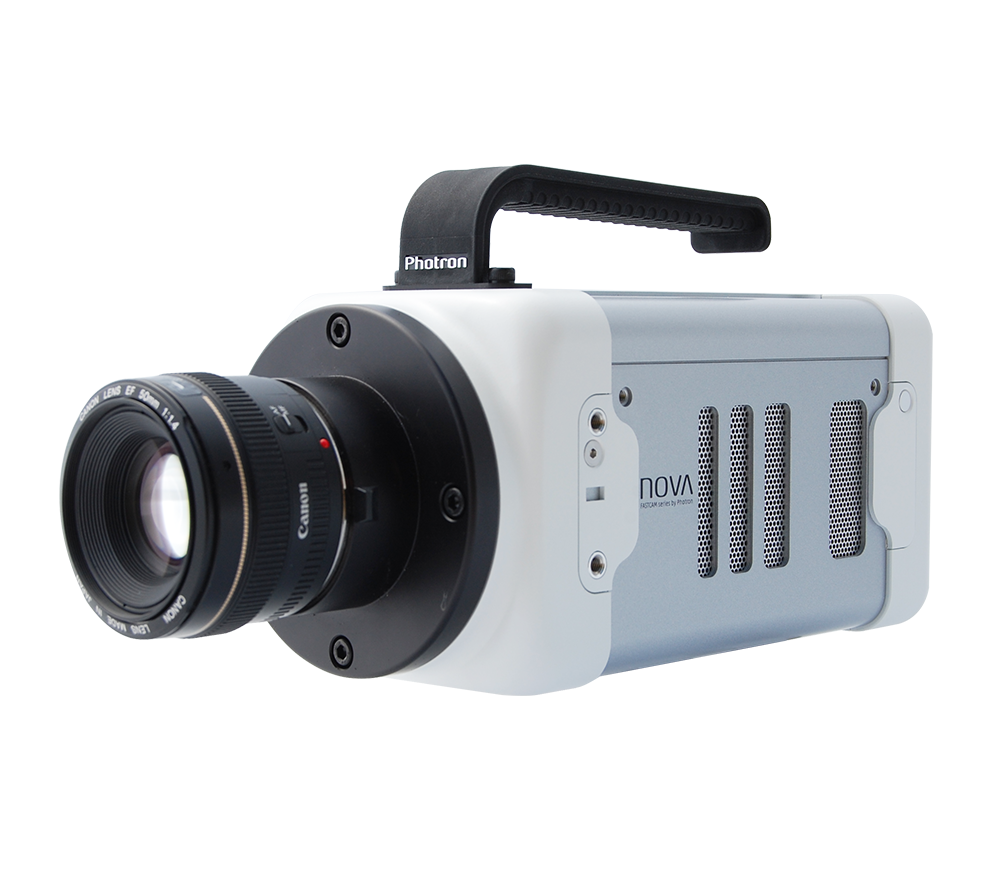
High-Speed Imaging
See what happens between the frames
Impact, crash, drop and ballistic events resolve in microseconds. High-speed cameras capture them, and paired with DIC they turn that footage into measured strain and displacement.
Overview
Frame rate is only half the problem
A high-speed camera that records the event but cannot be synchronized to your measurement chain leaves you with video, not data. Trilion deploys Phantom and Photron cameras as measurement instruments: calibrated, triggered with the test, and feeding ARAMIS Optical Strain so every frame carries full-field displacement and strain.
That matters because the interesting part of a dynamic test is usually over before a conventional sensor has settled. Full-field capture at high frame rate lets you find where a structure failed, and when, rather than inferring it afterwards. Synchronization runs through the ARAMIS Controller.
Cameras
Phantom, for the fastest events
The Phantom TMX 7510 records 1280 x 800 at 76,000 frames per second and scales past 700,000 frames per second at reduced resolution, which is the range ballistics, blast and fracture work needs. The T4040 trades some of that speed for a 4.2 megapixel sensor, keeping enough spatial detail for full-field DIC across a large field of view.
The VEO 1310 is the portable option for field and range work, and the KT840 is built to stay installed inside a machine or test cell.
Cameras
Photron, frame rate against light
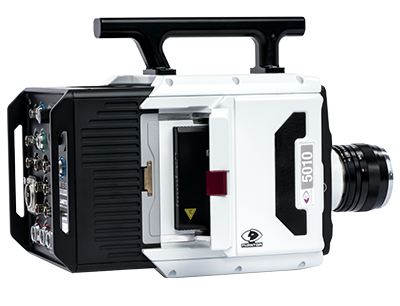
The Photron Nova S and Nova R series balance frame rate against light sensitivity, which suits drop towers, vibration and longer events where lighting is constrained rather than unlimited.
Sensitivity matters more than headline frame rate whenever exposure time is short and the scene cannot be flooded with light. Pair either with GS Vitec QX lighting and the G8X controller.
Applications
Where high-speed capture earns its cost
Crash and sled testing, drop and impact, ballistic and blast, fracture and crack propagation, high-cycle vibration, and any test where a component fails faster than a conventional gauge can follow.
Used across aerospace, automotive, electronics and materials research programs where a single destructive test has to yield every measurement it possibly can. High strain rate work often pairs high-speed imaging with infrared on the same event.
High-Speed Imaging systems
The cameras Trilion deploys and supports in this category
Market Leader in Ultra High-Speed
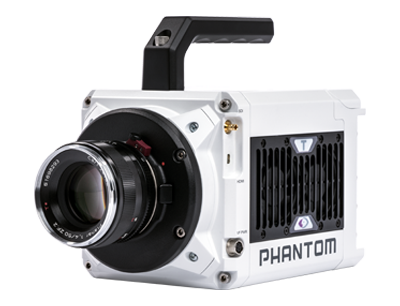
Phantom TMX Series
The fastest Phantom cameras ever built. Up to 1.75 million fps at reduced resolution, 76 Gpx/s throughput, and BSI sensor sensitivity for ballistics, fluid dynamics, and fracture mechanics.
Learn more →
Most Flexible Series
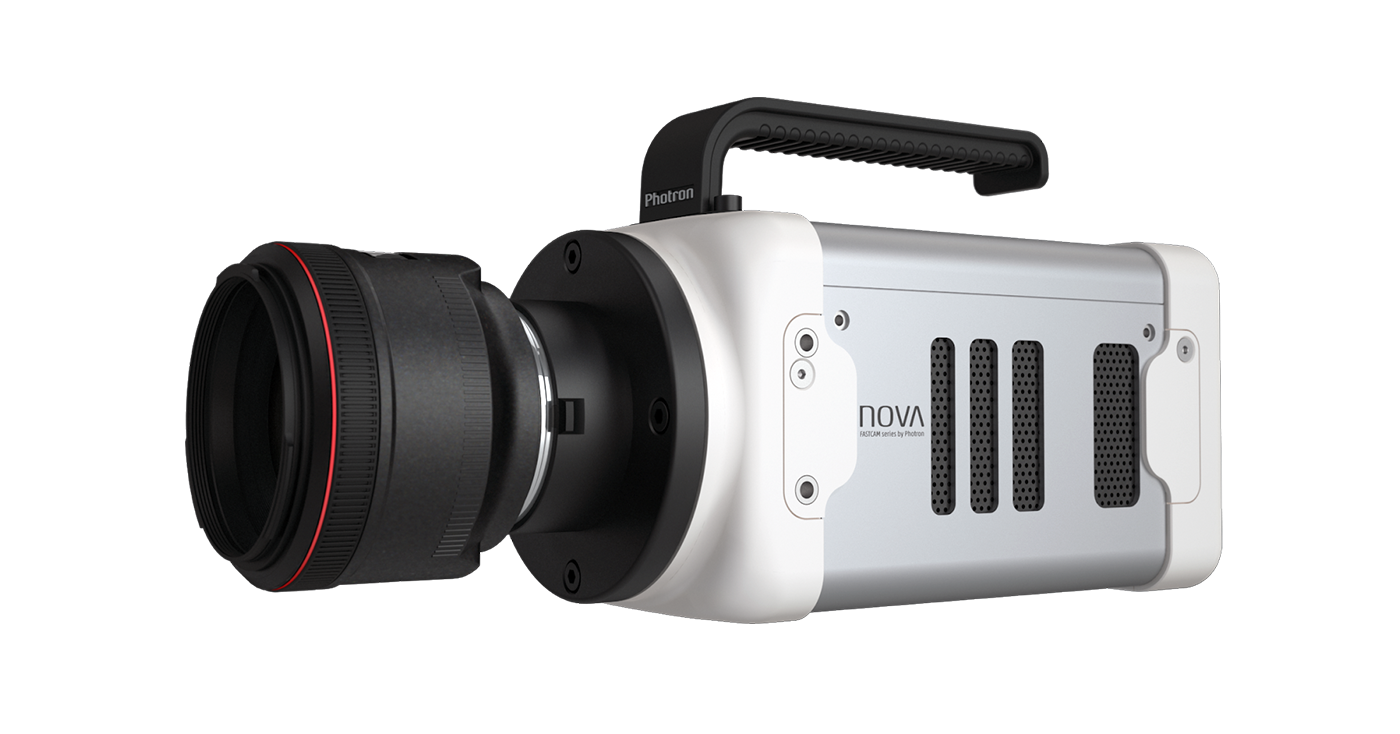
Phantom T-Series
T-Series cameras pair multi-megapixel resolution with thousands of frames per second. Ideal for material testing with DIC, automotive crash analysis, and biomechanics motion capture.
Learn more →
High-speed megapixel imaging
Photron Nova S Series
Nova S cameras deliver megapixel resolution at high frame rates with low-light sensitivity. Built for drop tests, impact analysis, and laboratory R&D imaging.
Learn more →
Portable High-Speed Camera
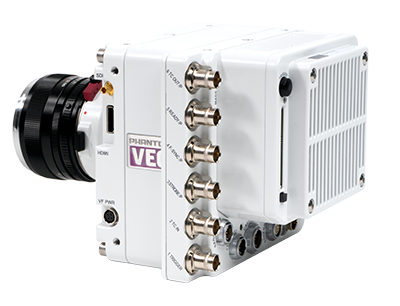
Phantom VEO 1310
Rugged, portable 1.3 megapixel high-speed camera reaching 10,860 fps at full resolution.
Learn more →
Leader in 4K Category for High-Speed
Photron Nova R Series
Nova R cameras combine 4K resolution with high frame rates for slow-motion capture where you cannot afford to lose detail. Common picks for film production reference, large-area material testing, and broadcast slow-mo.
Learn more →
Ultrahigh-Speed Camera
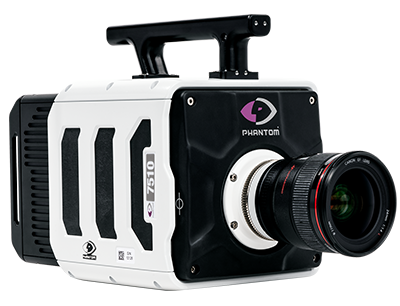
Phantom TMX 7510
Backside-illuminated ultrahigh-speed camera reaching 76,000 fps at 1280 x 800 and up to 744,000 fps reduced.
Learn more →
High-Resolution High-Speed Camera
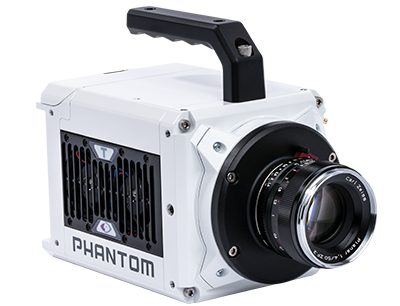
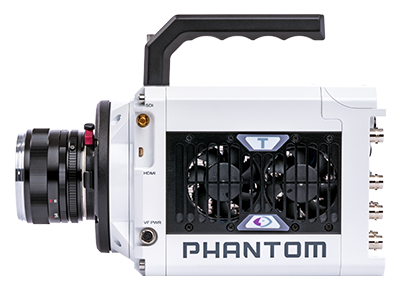
Phantom T4040
4.2 megapixel high-speed camera recording 2560 x 1664 at 9,350 fps, up to 440,000 fps at reduced resolution.
Learn more →
High-Speed Camera
Phantom T3610
1 megapixel high-speed camera recording 1280 x 800 at 38,040 fps, up to 875,000 fps at reduced resolution.
Learn more →
Embedded High-Speed Camera
Phantom KT840
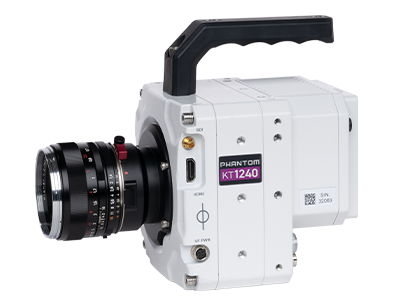
Compact 4.2 megapixel camera for embedded and permanently installed high-speed measurement stations.
Learn more →Lighting and control
High-output lighting and control built for short exposure times
High-output LED lighting for high-speed imaging
GS Vitec QX Lights
MultiLED QX-class continuous LED lights from GS Vitec deliver flicker-free, high-flux illumination for high-speed and thermal imaging tests. The light spectrum and intensity hold steady across long captures so DIC and motion analysis stay quantitative.
Learn more →Multi-channel controller for GS Vitec MultiLED arrays
GS Vitec G8X Controller
The G8X drives multiple MultiLED QX fixtures from one panel, with per-channel intensity, sync triggering, and overheat protection. Built for test cells where lighting is choreographed with the camera trigger.
Learn more →Related Resources
Case studies, application notes, and technical documentation
High-Speed Infrared Imaging of Crack and Hot-Spot Formation in a Graphite-Fiber and Epoxy Composite Under Dynamic Load
High-speed infrared imaging at 20,000 fps during split-Hopkinson pressure bar experiments on graphite-fiber and epoxy ...
Read more →Optical 3D Deformation and Strain Measurement (ASNT Nondestructive Testing Handbook, Chapter 10)
Revised ASNT Nondestructive Testing Handbook chapter on 3D image correlation for full-field deformation and strain ...
Read more →Full Field Deformation Measurements During Seismic Loading of Masonry Buildings
This article demonstrates the potential of the Digital Image Correlation (DIC) method to provide accurate full field ...
Read more →No resources match this filter - browse all resources →
Ready to measure a dynamic event?
Talk to an engineer about frame rate, field of view, lighting and synchronization for your test. Not ready to buy? Rent a system or book on-site training.